Colombia’s government struggling to control former guerrilla colony
- Colombia
- marzo 10, 2025
- No Comment
- 217
Colombia’s government and security forces have been struggling to maintain control over a town in the southwest of the country that has been controlled by guerrillas for decades.
Guerrillas and locals from the Micay Canyon have been trying to expel the security forces from the town of El Plateado that came under State control after a military offensive in October last year.
Following the military offensive, the National Army has struggled to maintain control over the canyon amid almost constant guerrilla attacks.
At the same time, government officials have been trying to convince locals to abandon the cultivation of coca, which has sustained the local economy and the guerrillas for as long as the people can remember.
To do this, the army set up a field hospital to provide the locals with public healthcare.
Government officials have been trying to secure the resources that would allow local farmers to transition to the viable production of legal crops.
Meanwhile, the guerrillas have been reinforcing locals’ deep-rooted distrust of the State and the possibility to integrate El Plateado into Colombia’s legal economy.
We are aware that the state abandonment that the population of this region has suffered for decades has allowed illegal armed groups to generate illegal economic dynamics and sow the politics of fear.
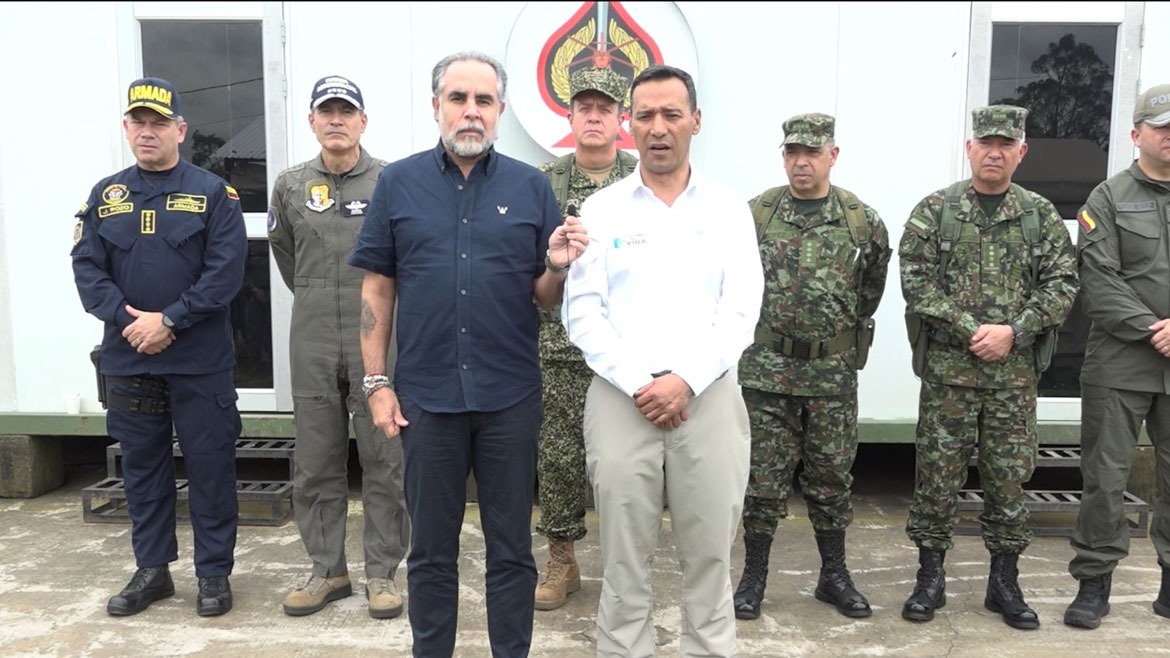
Interior Minister Armando Benedetti
After the army failed to prevent the destruction of a bridge connecting El Plateado to the nearby town of La Hacienda, dozens of locals rose up on Saturday and demobilized the security forces.
The locals agreed to release the 29 retained policemen and soldiers after mediation by the Ombudsman’s Office.
Despite the tensions between the locals and Bogota, Defense Minister Pedro Sanchez vowed that “our soldiers and policemen remain steadfast in their efforts to protect the population and confront all illegal armed groups.”
According to President Gustavo Petro, “the farmers decide if they continue with an illicit economy that only brings the death of their children and despair or the government and the voluntarily transition to an economy for life.”